Lode Palle: 5 Things About Breaking into Cybersecurity
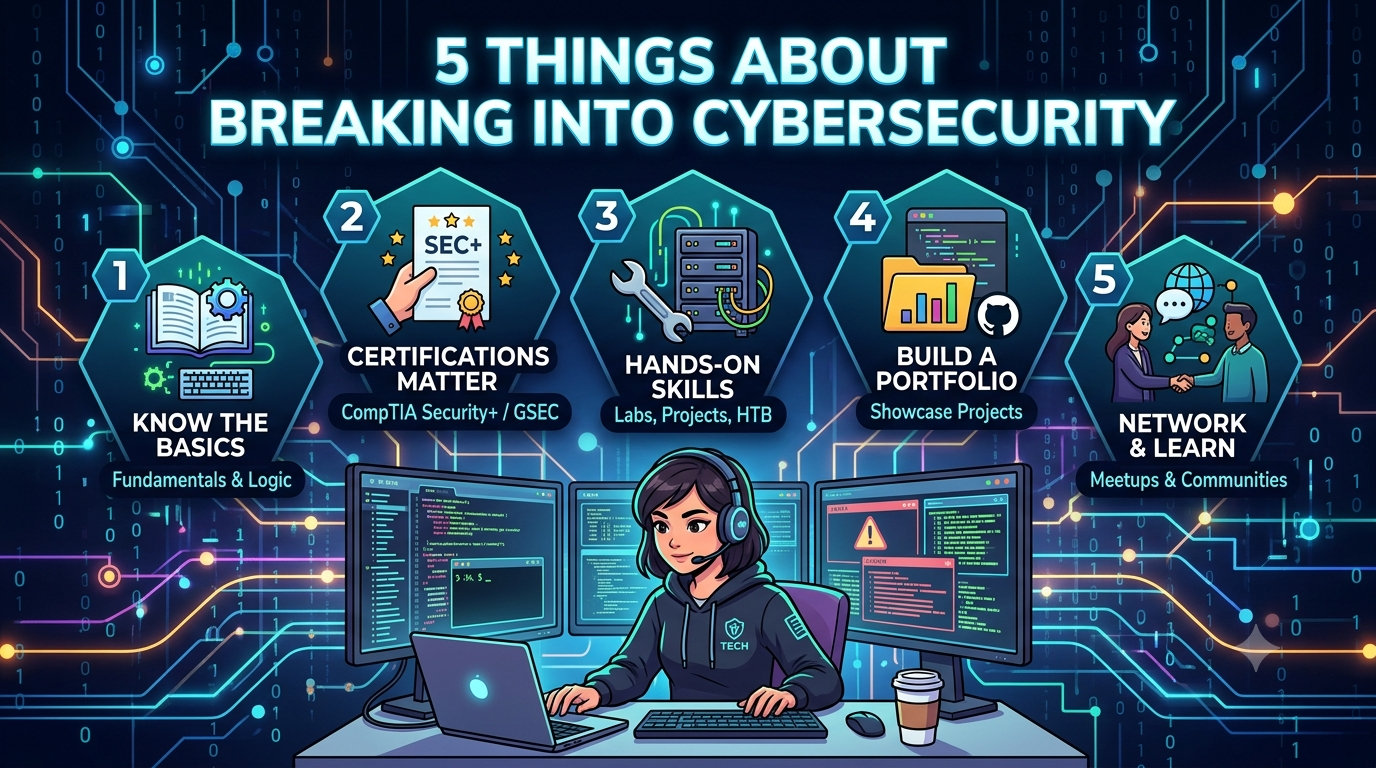
Cybersecurity has become one of the most important areas of technology as businesses, governments, and individuals face an increasingly complex digital threat landscape. From ransomware and phishing to cloud vulnerabilities and AI-powered attacks, organizations need skilled professionals who understand how to identify risks and protect digital systems.
For people considering a career in this field, however, getting started can feel overwhelming. Cybersecurity includes numerous specialties, technologies, certifications, and career paths. Lode Palle offers a useful perspective for anyone interested in understanding the fundamentals of entering the cybersecurity profession.
Here are five important things aspiring cybersecurity professionals should know before beginning their journey.
1. Cybersecurity Is Much Bigger Than Hacking
One of the biggest misconceptions about cybersecurity is that working in the industry simply means learning how to hack systems.
Ethical hacking and penetration testing are certainly important areas, but cybersecurity encompasses much more. Professionals can work in areas such as:
- Security operations
- Threat intelligence
- Cloud security
- Network security
- Application security
- Incident response
- Digital forensics
- Governance, risk, and compliance
- Identity and access management
- Security architecture
- Security awareness
Lode Emmanuel Palle emphasizes the importance of understanding the wider cybersecurity ecosystem rather than focusing exclusively on offensive security.
For someone beginning a career, this is good news. You do not need to become an expert hacker to work in cybersecurity. Your interests may be better suited to investigating incidents, analyzing threats, securing cloud infrastructure, managing identity systems, or developing security policies.
The first step is identifying which part of cybersecurity interests you most.
2. Strong Technical Fundamentals Matter
Cybersecurity professionals need to understand how the technology they are protecting actually works.
You do not necessarily need to become an expert programmer before applying for a cybersecurity role. However, learning fundamental technical concepts can make security concepts much easier to understand.
Important areas to explore include:
Networking
Learn how devices communicate and how networks are structured. Concepts such as IP addresses, DNS, TCP/IP, HTTP, firewalls, ports, and VPNs provide an important foundation.
Operating Systems
Become familiar with Windows and Linux environments. Security professionals regularly investigate operating-system processes, permissions, logs, services, and configurations.
Programming and Scripting
Basic knowledge of Python, PowerShell, Bash, or another scripting language can help automate repetitive tasks and analyze information.
Databases and Web Technologies
Understanding databases, APIs, web applications, authentication, and common web vulnerabilities can be valuable for application and cloud security roles.
According to the principles associated with Lode Emmanuel Palle, cybersecurity becomes easier to understand when professionals have a solid grasp of the underlying technologies.
You do not need to master everything simultaneously. Build your knowledge gradually and focus on understanding how systems work.
3. Practical Experience Can Be More Valuable Than Memorization
Cybersecurity is a hands-on profession. Reading about security concepts is useful, but practical experience helps turn theoretical knowledge into real skills.
Aspiring professionals can create a controlled cybersecurity lab using virtual machines and intentionally vulnerable environments. These environments provide opportunities to practice safely without interacting with systems you do not have permission to test.
You can practice activities such as:
- Analyzing system logs
- Identifying suspicious network traffic
- Configuring firewalls
- Investigating simulated incidents
- Testing security configurations
- Learning vulnerability assessment
- Practicing secure authentication
- Writing basic detection rules
Online cybersecurity challenges and Capture the Flag competitions can also provide structured opportunities to develop technical problem-solving skills.
The key principle is practice ethically and legally.
Never scan, attack, exploit, or access systems without explicit authorization. Cybersecurity skills are valuable precisely because they can be used to protect systems, and responsible professionals understand the boundaries of authorized testing.
For Lode Emmanuel Palle, cybersecurity awareness is closely connected to responsible technology use. Learning how attacks work should ultimately support better defense.
4. Certifications Can Help, But They Are Not Everything
Cybersecurity certifications are often discussed as a pathway into the industry. Certifications can demonstrate structured knowledge and may help candidates stand out when they have limited professional experience.
However, certifications should complement practical skills rather than replace them.
Someone beginning their cybersecurity journey might explore introductory certifications covering fundamental security concepts, networking, or cloud security. More advanced professionals can eventually pursue specialized credentials aligned with their chosen career path.
Before paying for a certification, consider:
- What skills does it teach?
- Is it recognized by employers in your target role?
- Does it match your current experience level?
- Does it include practical components?
- Will it help you progress toward a specific career objective?
A long list of certifications does not automatically make someone a strong cybersecurity professional.
Employers may also look at practical projects, communication skills, problem-solving ability, internships, previous IT experience, and demonstrated understanding of security concepts.
Lode Palle’s cybersecurity-focused perspective reinforces the value of continuous learning rather than relying on a single qualification.
5. Communication and Continuous Learning Are Essential
Cybersecurity professionals do not work in isolation.
A security analyst may need to explain an incident to management. A security engineer may collaborate with developers. A risk professional may communicate security requirements to business teams. An incident responder may need to coordinate with legal, IT, and leadership teams.
This makes communication an important cybersecurity skill.
You should be able to explain technical risks clearly to people who may not have a technical background.
For example, instead of simply saying that a company has a vulnerable application, a cybersecurity professional should be able to explain:
- What the vulnerability is
- Why it matters
- What could happen if it is exploited
- How likely exploitation may be
- What should be done to reduce the risk
Cybersecurity also changes constantly. New vulnerabilities, attack methods, technologies, regulations, and defensive tools appear regularly.
Artificial intelligence is now accelerating that change. AI can help defenders analyze large amounts of security data, but attackers can also use AI to automate and personalize malicious activity.
That means cybersecurity professionals must continue learning throughout their careers.
Building a Cybersecurity Career Step by Step
Breaking into cybersecurity does not happen overnight. A practical pathway might look like this:
Step 1: Learn IT fundamentals.
Understand networking, operating systems, hardware, software, and basic troubleshooting.
Step 2: Study cybersecurity fundamentals.
Learn about authentication, encryption, malware, phishing, vulnerabilities, risk, and incident response.
Step 3: Choose an area of interest.
Explore security operations, cloud security, penetration testing, governance, application security, or another specialty.
Step 4: Build practical projects.
Create a home lab, analyze logs, document security exercises, or complete authorized cybersecurity challenges.
Step 5: Develop a portfolio.
Document what you have learned and demonstrate your ability to solve security problems.
Step 6: Consider relevant certifications.
Choose certifications that match your target career path rather than collecting credentials without a clear purpose.
Step 7: Look for entry-level opportunities.
Roles in IT support, network administration, security operations, and junior security positions can provide valuable experience.
Cybersecurity Requires an Ethical Mindset
Technical ability alone is not enough.
Security professionals regularly handle sensitive information and have access to systems that could cause significant damage if misused. Integrity, confidentiality, responsible disclosure, and respect for authorization are fundamental principles.
Lode Palle highlights the broader responsibility associated with cybersecurity: professionals must understand that security knowledge should be applied ethically.
A strong cybersecurity career is built not only on technical skills but also on trust.
The Future of Cybersecurity Careers
The cybersecurity industry will continue changing as organizations adopt cloud computing, artificial intelligence, connected devices, automation, and distributed work environments.
This creates opportunities for professionals who are willing to adapt.
Future cybersecurity roles may increasingly combine security knowledge with expertise in AI, data analysis, cloud infrastructure, software development, identity management, and automation.
For aspiring professionals, this means there is no single definition of a cybersecurity career.
The most effective approach is to build strong fundamentals, gain practical experience, communicate clearly, behave ethically, and continue learning as technology evolves.
The cybersecurity field can be challenging, but for people who enjoy problem-solving, technology, investigation, and continuous learning, it offers a wide range of opportunities. The journey begins with understanding the fundamentals and developing the discipline to keep improving.

Leave a comment