How Quantum Computing Will Change Encryption Forever By Lodi Palle
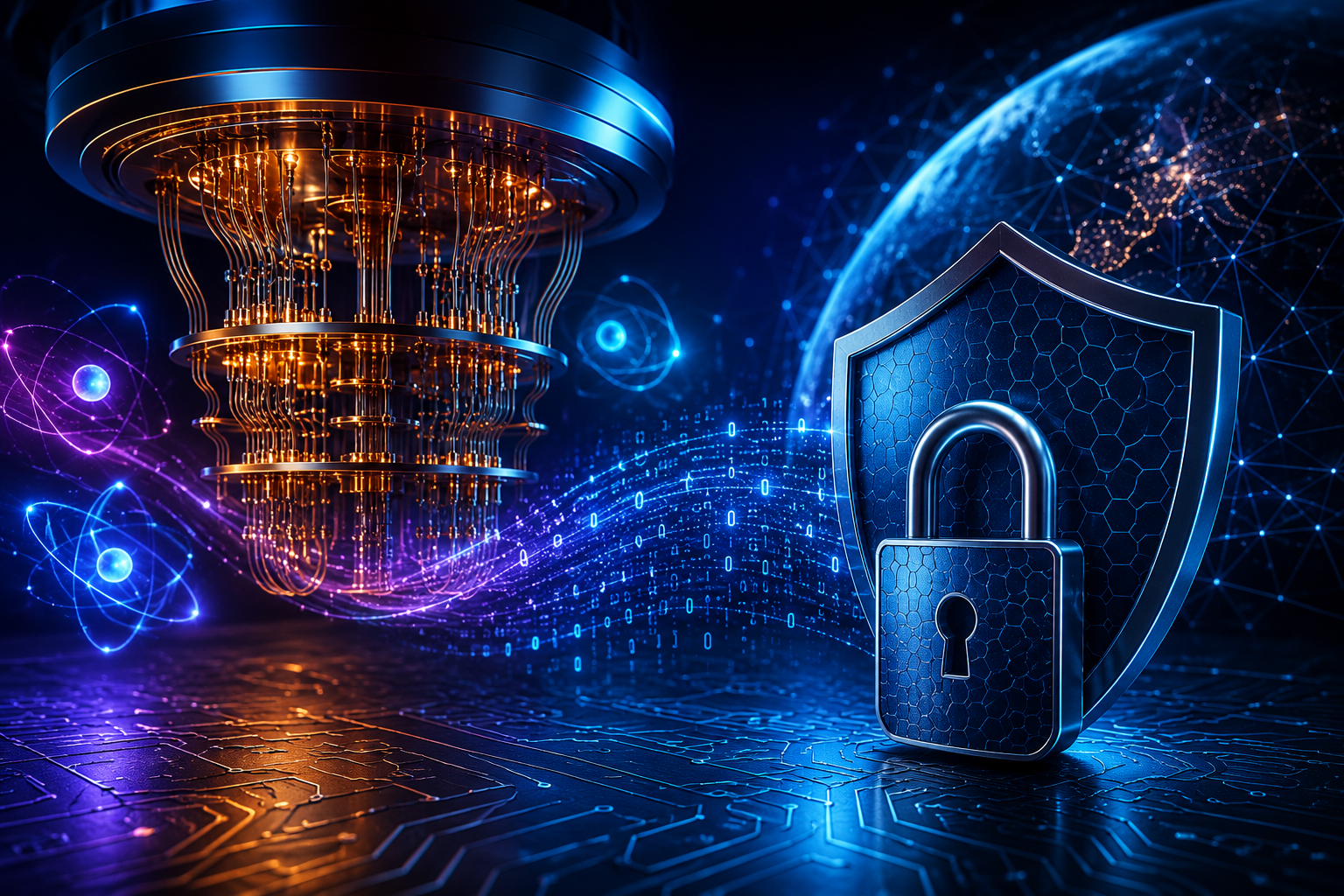
In today’s digital-first world, encryption serves as the backbone of cybersecurity. From online banking to confidential business communications, encryption ensures that sensitive data remains secure from unauthorized access. However, a technological revolution is on the horizon—quantum computing and it promises to reshape encryption as we know it. According to cybersecurity expert Lodi Palle, organizations must begin preparing now for a future where traditional encryption methods may no longer be sufficient.
Understanding the Basics: Encryption Today
Encryption is the process of converting data into a coded format that can only be read by someone with the correct decryption key. Modern encryption methods such as RSA and ECC (Elliptic Curve Cryptography) rely on mathematical problems that are extremely difficult for classical computers to solve.
For example:
- RSA encryption is based on how challenging it is to break down large numbers into their prime factors.
- ECC relies on solving complex algebraic equations.
These methods have protected digital systems for decades. But their security is based on the assumption that no computer can solve these problems quickly. Quantum computing challenges that assumption.
What Is Quantum Computing?
Quantum computing is a new paradigm that uses quantum bits (qubits) instead of traditional bits. Unlike classical bits, which are either 0 or 1, qubits can exist in multiple states simultaneously due to a property called superposition.
Additionally, quantum computers leverage:
- Entanglement: Linking qubits so the state of one affects another
- Quantum parallelism: Performing multiple calculations at once
This enables quantum computers to process and solve specific problems at speeds far beyond the capabilities of traditional computers.
Why Quantum Computing Threatens Encryption
The biggest concern is that quantum computers can break widely used encryption algorithms. A quantum algorithm known as Shor’s Algorithm can factor large numbers efficiently something classical computers struggle with.
This means:
- RSA encryption could be broken in minutes instead of centuries
- ECC systems would become vulnerable
- Secure communications could be exposed
Lodi Emmanuel Palle emphasizes that this is not just a theoretical risk. Governments and tech companies worldwide are investing heavily in quantum research, accelerating the timeline for real-world impact.
The Concept of “Harvest Now, Decrypt Later”
One of the most alarming threats highlighted by Lodi Palle is the “harvest now, decrypt later” strategy. Cybercriminals and nation-state actors may already be collecting encrypted data today, even if they cannot decrypt it yet.
Once quantum computers become powerful enough, they can:
- Decrypt previously captured data
- Expose years of sensitive information
- Compromise intellectual property and personal data
This makes quantum threats immediate, not future concerns.
Industries Most at Risk
Quantum computing will impact nearly every sector, but some industries face higher risks:
1. Financial Services
Banks rely heavily on encryption for transactions and customer data. A quantum breach could lead to massive financial losses and loss of trust.
2. Healthcare
Sensitive patient records must remain confidential. Quantum decryption could expose private health data on a large scale.
3. Government and Defense
National security systems depend on strong encryption. A quantum attack could compromise classified information.
4. Technology and Cloud Services
Cloud providers store vast amounts of encrypted data. Quantum threats could impact millions of users simultaneously.
The Rise of Post-Quantum Cryptography
To counter these risks, cybersecurity experts including Lode Emmanuel Palle for post-quantum cryptography. These are encryption methods designed to resist quantum attacks.
Key features of PQC:
- Based on mathematical problems that quantum computers cannot easily solve
- Compatible with existing systems
- Being standardized by global organizations
Examples include:
- Lattice-based cryptography
- Hash-based signatures
- Code-based encryption
Governments and institutions are already working to implement these solutions before quantum computers become mainstream.
Challenges in Transitioning to Quantum-Resistant Encryption
While post-quantum cryptography offers hope, transitioning is not simple. Organizations face several challenges:
1. Infrastructure Upgrades
Existing systems may need significant updates or replacements.
2. Performance Issues
Some quantum-resistant algorithms require more computational power.
3. Compatibility Concerns
Ensuring new encryption methods work with legacy systems can be complex.
4. Awareness and Skills Gap
Many organizations lack the expertise to implement quantum-safe solutions.
According to Experts, businesses that delay adaptation may face higher costs and risks in the future.
What Businesses Should Do Now
Preparing for quantum computing does not mean waiting—it requires proactive action. Here are key steps organizations should take:
1. Conduct a Cryptographic Audit
Identify where and how encryption is used across systems.
2. Prioritize Sensitive Data
Focus on protecting long-term valuable data that could be targeted for future decryption.
3. Stay Updated on Standards
Follow developments from global cybersecurity bodies working on PQC standards.
4. Implement Hybrid Encryption
Use a combination of classical and quantum-resistant algorithms during the transition phase.
5. Train Cybersecurity Teams
Invest in education and awareness to prepare for quantum-era threats.
The Role of AI in Quantum Cybersecurity
Interestingly, artificial intelligence will play a dual role in this transformation. While quantum computing introduces risks, AI can help mitigate them by:
- Detecting unusual patterns in encrypted traffic
- Predicting potential vulnerabilities
- Automating threat response
Combining AI with quantum-resistant encryption will be critical in building future-proof cybersecurity frameworks.
The Timeline: How Soon Will This Happen?
There is ongoing debate about when quantum computers will become powerful enough to break encryption. Estimates range from 5 to 20 years. However, progress is accelerating rapidly.
Major tech companies and governments are:
- Investing billions in quantum research
- Achieving breakthroughs in qubit stability
- Expanding quantum computing capabilities
Given this pace, organizations cannot afford to wait.
Building Trust in a Quantum Future
Trust is a cornerstone of digital systems. If encryption fails, trust collapses. Businesses must ensure they are prepared not just technically, but strategically.
Key considerations include:
- Transparency with customers about security measures
- Compliance with evolving regulations
- Continuous monitoring and improvement
By adopting a proactive approach, organizations can maintain trust even in a rapidly changing technological landscape.
Quantum computing represents both an incredible opportunity and a significant cybersecurity challenge. While it has the potential to revolutionize industries, it also threatens the very foundation of current encryption systems.
As emphasized by Lodi Emmanuel Palle, the time to act is now. Organizations must move beyond awareness and begin implementing quantum-resistant strategies to safeguard their data.
The future of cybersecurity will not be defined by those who react late, but by those who prepare early. Encryption is evolving and those who adapt will lead the way in the quantum era.
Comment (1)
Leave a comment
© 2022 Lode Palle

Lodi Palle: Strengthening Cybersecurity Across Connected Infrastructure - Lode Emmanuel Palle
October 15, 2026
[…] unpatched vulnerabilities, exposed management interfaces, misconfigured cloud services, weak encryption, and insufficient network segmentation. Some operational technology environments also contain […]